| Home | > | List of families | > | Aspleniaceae | > | Asplenium | > | trichomanes |
Asplenium trichomanes
quadrivalens
Selected images: Click on each image to see a larger version and details of the record View all images (2)
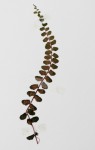
Photo: Petra Ballings
BR
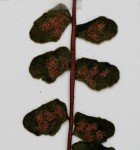
Photo: Petra Ballings
BR
Detailed records: Display species records QDS maps by: Google Maps Point records by Google Maps
Species details: Click on each item to see an explanation of that item (Note: opens a new window)
| Synonyms: |
Asplenium anceps Sol. ex Lowe Asplenium germanicum J.Cardoso Asplenium trichomanes L. var. genuinum Willk. Chamaefilix trichomanes (L.) Farw. |
| Common names: | |
| Frequency: | |
| Status: | Native |
| Description: |
Rhizome erect; scales dark brown, lanceolate, up to 4 mm long, margins minutely serrulate. Fronds tufted, not proliferous. Stipe up to 9 cm, glabrous, dark-brown to almost black, shiny. Lamina 6-23 cm × 1-1.5 cm, pinnate, oblong-linear in outline. Pinnae obovate to oblong-circular, up to 32 pairs, margins entire to subentire, glabrous above, a few minute scales below. Rhachis dark-brown to blackish, glabrous. Sori 3 or 4 pairs per pinna at 30-45° to the costa, linear or elongate; indusium entire. |
| Notes: | Differs from similar species ( A. monanthes and A. lunulatum) by not proliferous fronds, oblong-circular pinnae and 3-4 pairs of sori per pinna. |
| Derivation of specific name: | trichomanes: a growth of hair, it was believed that this fern was a hair restorer.
quadrivalens: quad- = four; valens = strong, stout, powerful. |
| Habitat: | Rock crevices, in boulder scree on high mountain tops; moist evergreen forest at lower elevations. Terrestrial or lithophyte. |
| Altitude range: (metres) | 880 - 2590 m |
| Worldwide distribution: | Kenya, Lesotho, South Africa, Tanzania, Zimbabwe. Also North Africa, Macaronesia, Britain, North America |
| Zimbabwe distribution: | E |
| Growth form(s): | Epiphyte. |
| Endemic status: | |
| Red data list status: | Data deficient |
| Insects associated with this species: | |
| Spot characters: | Display spot characters for this species |
| Images last updated: | Friday 18 November 2011 |
| Literature: |
Burrows, J.E. (1990). Southern African Ferns and Fern Allies. Frandsen, Sandton. Pages 228 - 229. (Includes a picture). Crouch, N.R., Klopper, R.R., Burrows, J.E. & Burrows, S.M. (2011). Ferns of Southern Africa, A comprehensive guide Struik Nature Pages 614 - 615. (Includes a picture). Golding, J.S. (ed.) (2002). Zimbabwe Plant Red Data List. Southern African Plant Red Data Lists. SABONET 14 Page 179. As Asplenium trichomanes Jacobsen, W.B.G. (1983). The Ferns and Fern Allies of Southern Africa. Butterworths, Durban and Pretoria. Pages 341 - 342. (Includes a picture). Mapaura, A. & Timberlake, J. (eds) (2004). A checklist of Zimbabwean vascular plants Southern African Botanical Diversity Network Report No. 33 Sabonet, Pretoria and Harare Page 5. Roux, J.P. (2001). Conspectus of Southern African Pteridophyta. Southern African Botanical Diversity Network Report 13 Page 172. Roux, J.P. (2009). Synopsis of the Lycopodiophyta and Pteridophyta of Africa, Madagascar and neighbouring islands Page 99. Schelpe, E.A.C.L.E. (1970). Pteridophyta Flora Zambesiaca Pages 174 - 175. |
Other sources of information about Asplenium trichomanes subsp. quadrivalens:
External websites:
African Plants: A Photo Guide (Senckenberg): Asplenium trichomanesAfrican Plant Database: Asplenium trichomanes
BHL (Biodiversity Heritage Library): Asplenium trichomanes
EOL (Encyclopedia of Life): Asplenium trichomanes
GBIF (Global Biodiversity Information Facility): Asplenium trichomanes
Google: Web - Images - Scholar
iNaturalist: Asplenium trichomanes
IPNI (International Plant Names Index): Asplenium trichomanes
JSTOR Plant Science: Asplenium trichomanes
Mansfeld World Database of Agricultural and Horticultural Crops: Asplenium trichomanes
Plants of the World Online: Asplenium trichomanes
Tropicos: Asplenium trichomanes
Wikipedia: Asplenium trichomanes
| Home | > | List of families | > | Aspleniaceae | > | Asplenium | > | trichomanes |